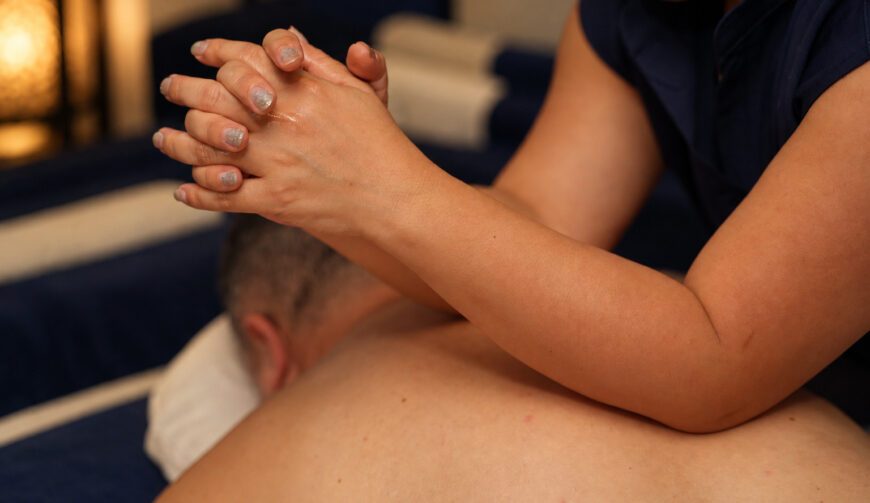
Choosing your first massage starts with how you would like the session to feel. Traditional Thai massage brings assisted stretching and rhythmic pressure into the experience. Deep tissue massage generally involves slower, sustained work on muscles and connective tissue.
When comparing Thai massage and deep tissue massage in NYC, think about movement, pressure and the areas you would like your therapist to focus on. Those preferences give you a useful starting point for choosing a session.
Thai massage: stretching and movement
Traditional Thai massage combines assisted stretches with rhythmic compression. The therapist guides your body through different positions, making movement a central part of the session.
Traditionally, it is performed fully clothed on a firm floor mat, without massage oil. Loose, comfortable clothing allows room for movement. Formats can differ between services, so confirm what to wear and how the session will be performed before your visit.
If you like the idea of guided stretching, this is an approach to discuss with the team. Share any movements or positions you find uncomfortable before the session begins.
Deep tissue massage: focused muscle work
Deep tissue massage uses slow strokes and sustained pressure to work on muscles and surrounding connective tissue. It often gives particular attention to areas you want to focus on, such as the shoulders or back.
Tell your therapist about your pressure preferences before the session. If something feels painful or uncomfortable, speak up and ask for an adjustment. You can describe the experience you want in everyday language; you do not need to know the name of a muscle or technique.
How to choose for your first visit
Consider these three preferences:
- Movement: If assisted stretching appeals to you, ask about Traditional Thai massage and the format available at your chosen studio.
- Focus: If you would like more time spent working on particular muscle areas, discuss a deep tissue session with the team.
- Pressure: Explain what feels comfortable to you, whichever style you choose. The service name alone does not communicate your personal preferences.
For example, you might say, “I would like some stretching, with lighter pressure around my shoulders,” or “I prefer focused work on my upper back.” A clear description helps the therapist understand what you are looking for.
Where Thai Combination and Thai Ashiatsu fit
Thai Touch Therapy also lists Thai Combination, which blends Thai and Western techniques, and our signature Thai Ashiatsu, which combines broad, foot-based pressure with Thai-inspired stretching.
If more than one approach interests you, call before booking to discuss the differences and check which services are available at the studio you plan to visit.
Before you book
Let the team know about injuries, pregnancy, recent surgery, medical conditions or areas you want avoided. If you are unsure whether massage is appropriate for you, check with your healthcare professional before booking. Do not use massage to delay medical care for a health concern.
Confirm the service format and appointment details with your chosen studio, and leave time to discuss your preferences before the hands-on work begins.
Find Thai massage in NYC
Whether you are looking for Thai massage near Columbus Circle, around Grand Central or in Jackson Heights, Queens, choose the studio that fits your day. Each location page links to that studio’s booking menu, where you can check available services and appointment times.
For help choosing your first session, call (917) 963-6337. Tell us your preferred pressure, whether you enjoy stretching and what you would like us to focus on.
Further reading: Cleveland Clinic: Thai Massage; Cleveland Clinic: Types of Massage Therapy; NCCIH: Massage Therapy.